


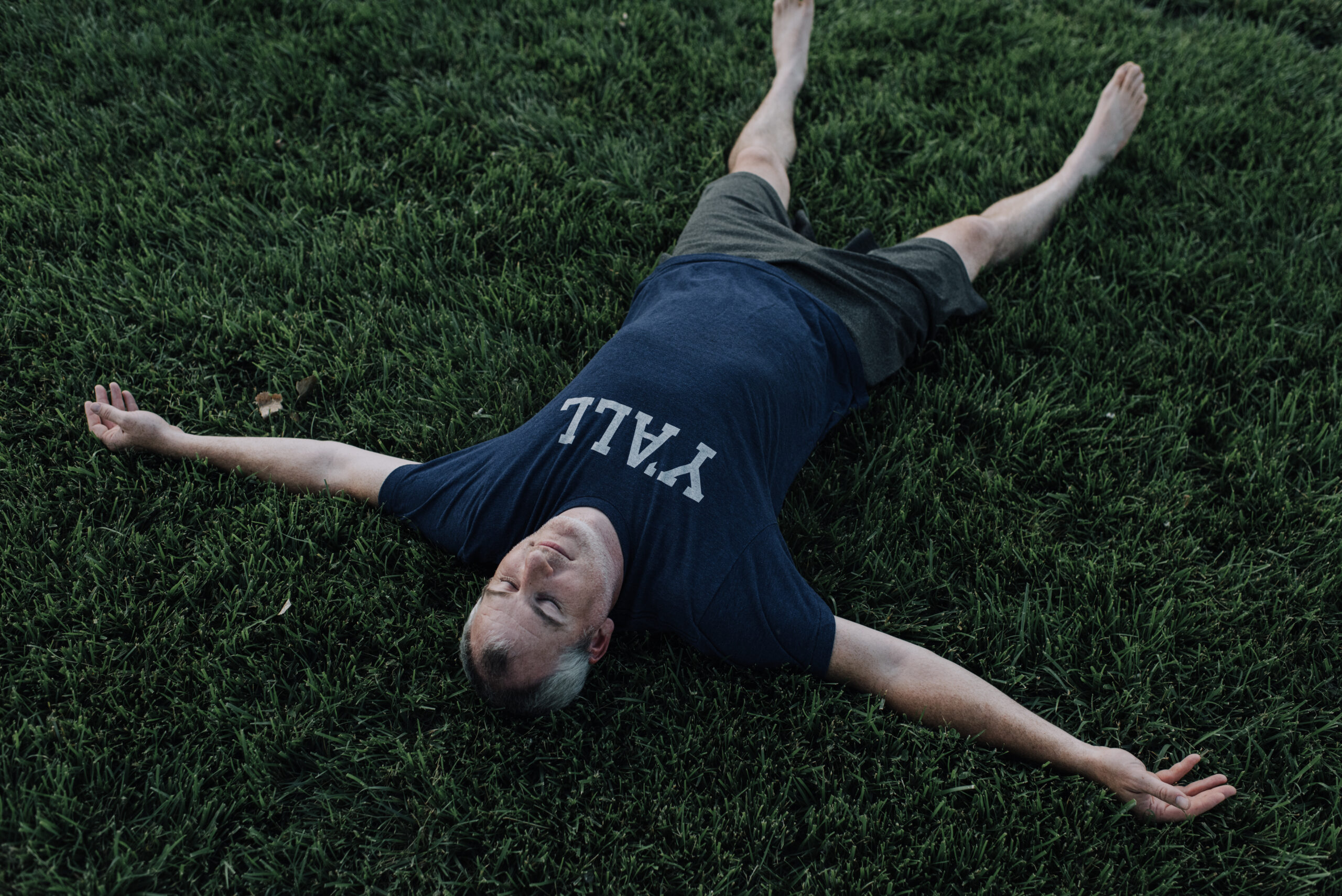
The 12th century Sufi poet Rumi writes, “The wound is the place where the light enters.” If this is true, then the world we live in today must be overflowing with light. It’s easy to look around and see lots of issues, lots of wounds: war, violence, cultural and political division, the list goes on. What I’ve come to learn, though, is that there is a way out, a way that draws on our own inner strength, even if it’s hidden or buried within us.
Yoga is not necessarily therapy, but it certainly has therapeutic value. Licensed mental health workers and clinicians already overwhelmingly recognize the merits of a yoga practice as a complementary healthcare treatment. At Lumin, we are incredibly mindful and respectful toward the phase-oriented approach to trauma and post-traumatic treatments. By bringing breath into the body, we practice the kind of self-regulation skills needed to engage in evidence-based trauma processing therapies, like CPT (Cognitive Processing Therapy), PE (Prolonged Exposure), and Equine Therapy, for example. When we can learn to stop, think, observe, and plan, we can begin to return to that home that is our truest Self, that being full of peace, of love, and of light.
The value of yoga for individuals coping with trauma are that it helps in alliance formation, stabilization, grounding, emotional regulation, arousal regulation, and identification and development of coping resources. Perhaps more tangibly, some of the more immediate benefits of a consistent yoga practice for individuals living with trauma are—
*experiencing better sleep;
*developing clearer concentration and focus;
*managing fear, anger and aggression; and
*discovering comfort in one’s own skin.
Three core principles I learned in my training with the Veterans Yoga Project that inform our approach in this class are that support precedes action, that fostering safety, predictability, and control is paramount, and that when we practice mindfulness of our lives in the present moment we can begin to find some peace, some non-judgmental awareness and acceptance in our daily lives. By doing so, we can begin to address the Venn Diagram from Hell, the post-traumatic stress, the chronic pain, the substance abuse, the depression, the anger and aggression, and the traumatic brain injuries that often arise out of our experiences with trauma.
Our mindful resilience practice will teach us to breathe, to meditate, to move, to rest, and to find gratitude. When we focus on the breath and sensation, when we embody mindfulness, authenticity, and compassionate presence, when we emphasize safety, predictability, and control, our lives can begin to move toward stability, toward strength, and toward flexibility, which can all help to put us on the path to recovery and resilience.
We begin with this practice on our mats so that we can live more fully off of them. I can’t wait to begin this journey with you.