



It’s important to consult your physician or physical therapist before beginning any new physical activity or exercises and always listen to your body and respect the warnings you hear.
A healthy spine is the key to a healthy life, so if you want to live long and well, work to keep your spine long and well. One of the greatest threats to the postural and spinal health of today’s society is the forward head posture epidemic that has progressed to what is often referred to as “text neck” or “tech neck.” Posture analysis is the start to determining the stress and strain we put on our spine throughout our daily activities. As a physical therapist, one of the most common postural abnormalities I observe in individuals with complaints of neck pain and headaches is the forward head posture.
Ideally, we want our head stacked over our shoulders, with earlobes in line with lateral tip of your shoulders. However, we commonly see the head protruded far forward with rounding of the upper back and shoulders which creates alarming forces of pressure on the spine and surrounding muscles and ligaments. It’s no surprise in today’s society, as we are constantly focusing on what is ahead of us: the road, a computer, our smart phone, or tablet. In addition, we are perpetually rushing, moving, reaching, trying to get ahead, catch up, and reach deadlines while we nudge our noses forward during this race through life. This situation has progressed to us essentially walking around with abnormal posture all day long while creating overuse injury to those postural muscles that are designed to help support an upright and alert spine.
The solution to keep our vision clear: stop rushing and stay in the present moment.
I cringe at times when I see our youth hunched over their screens and displaying this exaggerated and prolonged forward head flexion while texting and scrolling, or with any use of tablets, smart phones, video games, and laptops. As the chin drops down towards the chest we can increase the force that our head is putting on our spine to as high as 50-60 pounds of pressure to the back of our upper spine (Hansraj 2014). This is like carrying my 7-year old around on the back of my neck all day long which would be detrimental. The neck is not designed to withstand that amount of force, as it is built and intended to hold up an average 10-pound head. If we continue to put this amount of strain on our vertebrae, muscles and ligaments we can end up with compression, irritation, pain and stiffness, and the problems will progress from there. If forward head posture is not addressed and treated properly it could advance to degeneration of the cervical spine, limited mobility, arthritis and chronic pain.
Y, W, L, T Exercises- “You Will Live Taller”
These exercises can be performed seated or standing but with a focus on working towards a neutral spine for optimal breath. Head should be retracted back with a subtle chin tuck while lengthening the back of the neck. Try to avoid shoulder blades scrunching up towards ears or pinching too tightly along the backside as this creates increased shearing forces along the spine.
When performing any exercises always listen to your body, move slowly, and remember to breathe. It can be common to a feel gentle pulling sensation with stretches or toning of muscles through engagement and holds. You should not feel any numbness, tingling, sharp, shooting, intense, or burning pain. If you do, back off until it goes away or consult your physical therapist.
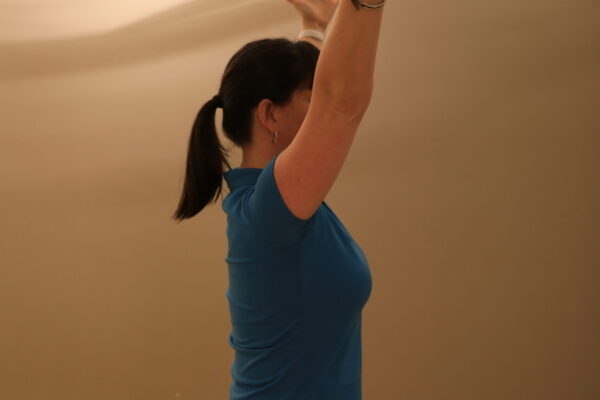
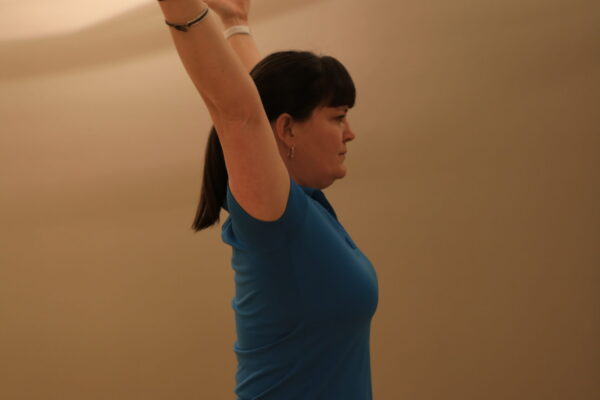
Y- Stand with arms in a Y position, thumbs point backwards.
Inhale, gently squeeze shoulder blades together, expand and open the heart as hands reach backwards and hold (3-5 seconds).
Exhale, release and relax as arms stay held in the Y position. Repeat 5-10 times.
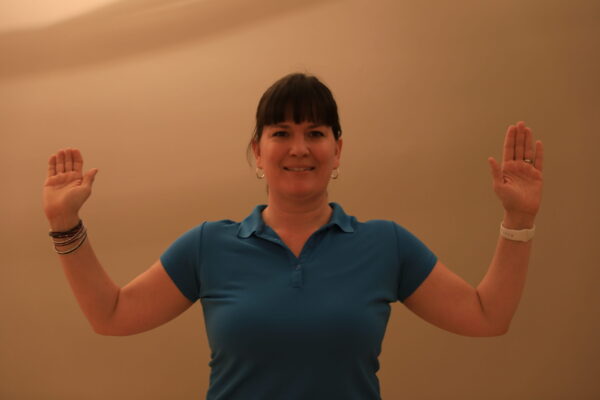
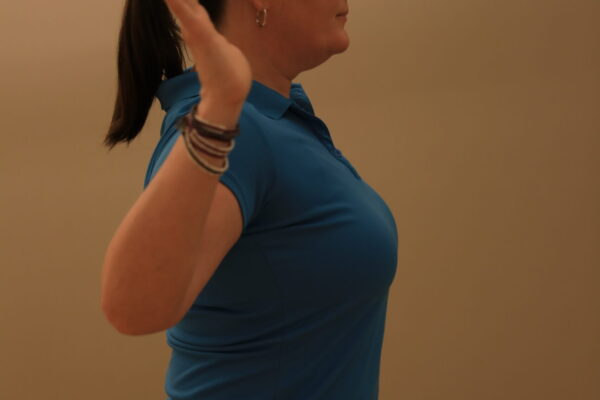
W- Stand with arms in a W position, palms face forward.
Inhale, gently squeeze shoulder blades together, expand and open the heart as hands reach backwards and hold (3-5 seconds).
Exhale, release and relax as arms stay held in the W position. Repeat 5-10 times.
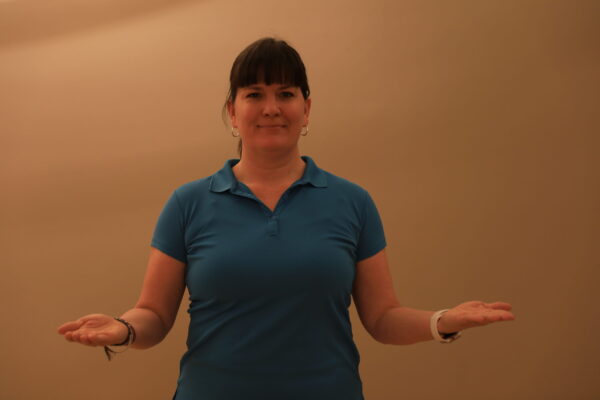
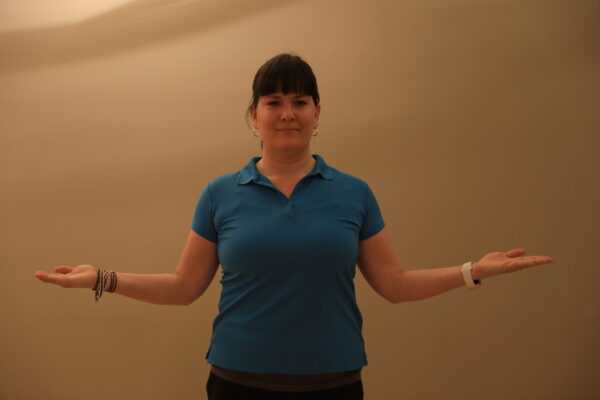
L- Stand with arms in a L position, palms face upward.
Inhale, gently squeeze shoulder blades together, expand and open the heart as thumbs reach backwards and hold (3-5 seconds).
Exhale, release and relax as arms stay held in the L position. Repeat 5-10 times.
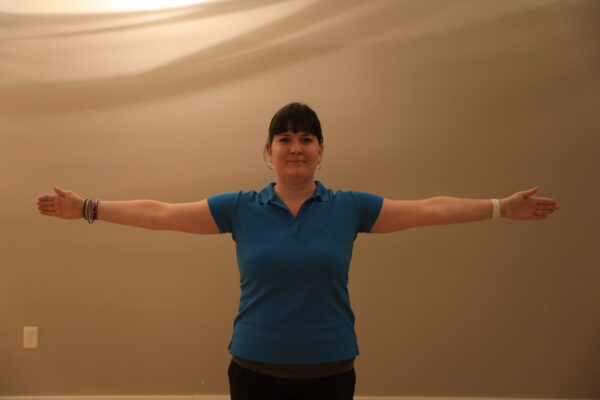
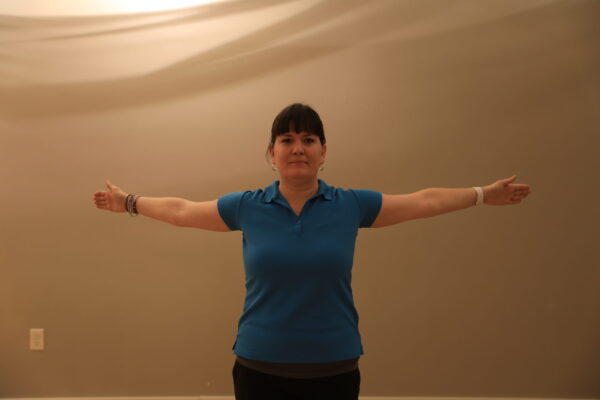
T- Stand with arms in a T position, palms face forward.
Inhale, gently squeeze shoulder blades together, expand and open the heart as hands reach backwards and hold (3-5 seconds).
Exhale, release and relax as arms stay held in the T position. Repeat 5-10 times.
Bonus benefits for all if you include loving thoughts to someone with each inhale as you open your heart towards yourself, a loved one, a stranger, an enemy.
Resource
Hansraj KK. Assessment of stresses in the cervical spine caused by posture and position of the head. Surg Technol Int. 2014 Nov;25:277-9. PMID: 25393825.