


Today I am wise So I am changing myself.
-Rumi
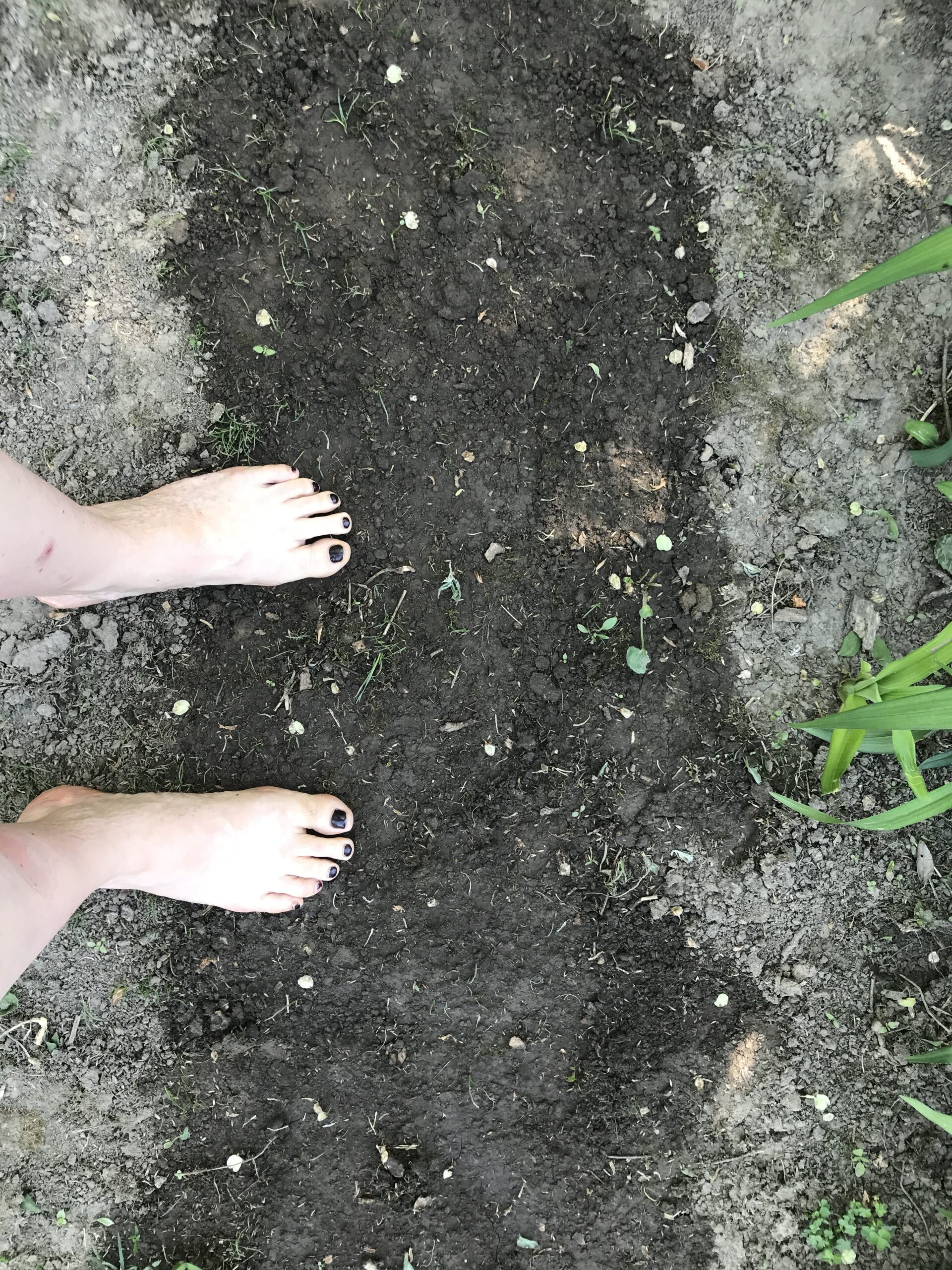
This morning I walked out to the backyard to plant the last of the wildflowers while the soil was saturated, fertile, and primed for new growth. I could see heavy moisture in the foggy sky and droplets covered each blade of grass as if it had drizzled rain. I immediately experienced the natural healing of the earth and was mindful as my toes slowly passed through the grass; I took a slow, deep inhale, and I saw the awesome beauty of every blade of grass standing before me as a sign of new blessings of life, of new growth. The cool and soft ground chilled my active nerves and soothed my muscles and bones with each step. Mother Earth is here for me today, I told myself, letting me know that she was there giving me life, supporting me and lifting me up. As I planted those seeds for wildflowers to attract buzzing bees, butterflies and birds, I also planted my seed of intention to grow into myself, confident in my knowledge and expertise, and open to attract those in search of their own sweetness or nectar of life and joy, free from suffering.
I practice mindfulness, breath work, self-care, and grounding all for my own personal health and well-being through a biopsychosocial approach. Although Roy Grinker was known to first formulate the term “biopsychosocial” (BPS) in a lecture in 1954 (1), it was psychiatrist, George Engel who gets most credit for introducing this BPS approach in 1977 (2). In these short 40 years, western medicine has just started to accept this challenge to the biomedical model of health care as being insufficient. The BPS model includes diverse contributing factors towards health such as home life, emotions, support system, diet, sleep schedule and much more beyond the physical body that we can see and touch.
Since March of 2017 I have been receiving training in Medical Therapeutic Yoga from Dr. Ginger Garner, PT, DPT, ATC/LAT, PYT, who founded the Professional Yoga Therapy Institute (PYTI) in 2000. Medical Therapeutic Yoga (MTY) incorporates the BPS model to offer an integrative approach to rehabilitation and wellness while merging the ancient practice of yoga and meditation with western society’s evidence-based research for rehabilitation (4). Through Medical Therapeutic Yoga individuals can dive deeper beyond the physical body, and learn strategies for self-care, health and wellness of their entire being. Finding long-lasting sustainable health and wellness requires complete and integrative care from finding integrity in our posture and our personality, cultivating positive social support, following a balanced diet and healthy lifestyle, maintaining positive and close relationships, finding balance of movement and rest, and of course, always, finding breath.
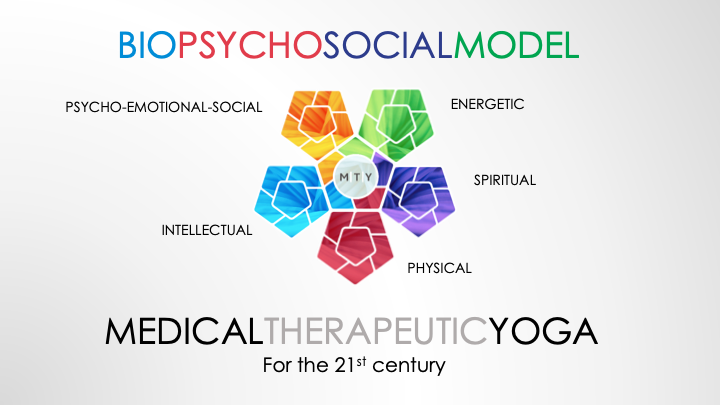
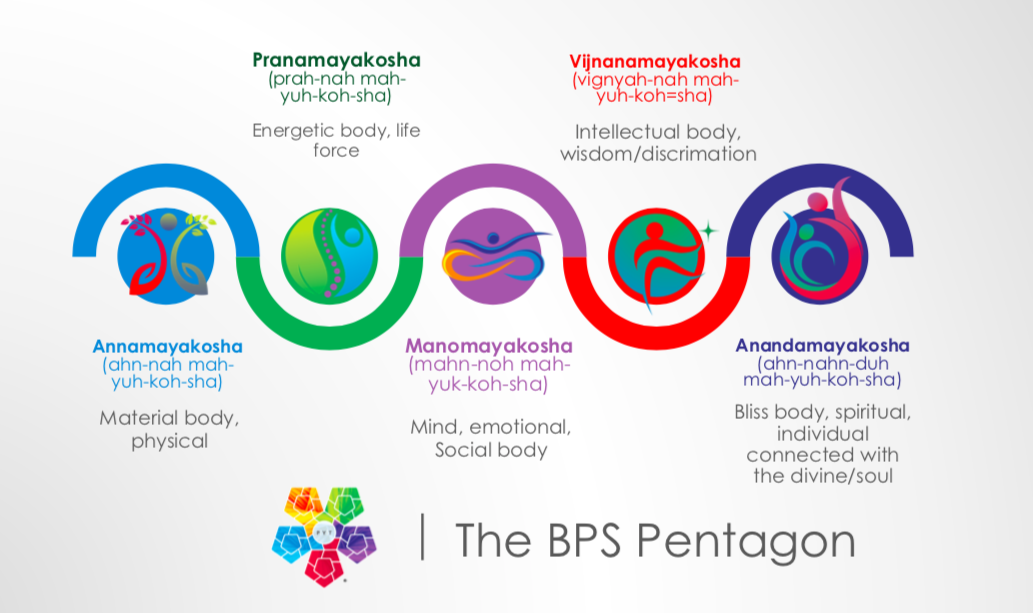
The BPS model introduced through the PYTI uses the pentagon symbol representing our 5 bodies, known also in Sanskrit as koshas, or “sheaths” which make up our whole entire being. These bodies or sheaths include the physical (annamayakosha) which is our material being, all material nature we consume, or in other words the food we eat, the food we become, all nourishment which we give and take from this universe. The energetic body (pranamayakosha) is characterized by the life force, our breath, the life force of all living things, this divine source of energy that fills our entire physical being. The psycho-emotional body (manomayakosha) acknowledges power of self-will, to dream, to wish, to understand, and to practice self-care. The intellectual body (vijnanamayakosha) goes deeper beyond a thought, wish or will and finds a deeper layer of existence with knowledge and control over toxic thoughts, freeing self of negative talk, fear and suffering. The spiritual body (anandamayakosha) is characterized by pure love, joy, cheerfulness, and bliss. All bodies united together with the common thread of love providing us a sense of safety, stability, creativity, fire, compassion, truth, wisdom, insight, and divinity. This whole person approach informs the type of intervention I offer my patients, clients, and students.
As with anything, there are documented limitations of the BPS model, some critiqued by psychiatrist Nassir Ghaemi in 2011 (3). In general, the problem is that there are no clear boundaries to what is all included, and thus he feels that the model reflects eclecticism, with many aspects which may be considered unscientific, trivial and “fluffy”. He argues that the mind/body relationship is inconsistent and can confuse treatment and etiology. I would argue, however, that there is no model for the mind/body relationship due to the endless number of variations that each unique individual and their genetic make-up, life experiences, life style, diet, sleep, work, and social support. I would also argue that we do not always have to have all of the answers for others but we can help individuals find the means to discover themselves, deeply, without judgement and once and for all create a sense of self care and ability to heal thyself. Therefore, even with its limitations, a BPS approach still allows me to customize my treatment plans to meet those I serve where they are, rather than where necessarily a medical or PT journal tells me they should be.
As a physical therapist with over a decade of experience in pediatrics to geriatrics, I have a good handle on postural and movement dysfunction and know several strategies to help correct to relieve pain, improve strength, mobility, and function. It hasn’t been until recently, though, that I have dived deeper into my own personal yoga practice where I have begun to see transformation throughout my subtle and energetic body. I’ve seen and experienced things that I have never come across in a text book or research article. I have witnessed the effects of my breath and mindfulness, which have shifted my nerves, eased my pain, and improved my function. I feel my energetic body when I just stop and listen; and I have learned strategies to alter these subtle non-tangible layers. Through control of my breath I can calm the nervous system, lower heart rate and blood pressure or choose to become more positively energized and fired up, ready for action, ready to conquer the worlds daily tasks. All through the breath. If I have the ability to create this felt-sense within myself, I feel confident I can help others translate or recreate it for themselves as well. This is one of my primary goals as a clinician.
So, how does Medical Therapeutic Yoga apply to my clinical specialty? It applies to my entire life—it creates that balance between rest and activation, searching and finding, releasing and relaxing, lifting and letting go. Through discovering my own biopsychosocial model to health and wellness, I have discovered that place of intersection where my passion, my talents, my mission, and a need for my service all meet to find my dharma, “to support, hold, or bear.” I will first put on my own oxygen mask, breathe for myself, forgive and love myself madly, all to be able to step into my own true essence: serving myself so that I can better serve others. With the inspiration of Henry David Thoreau words, “[I] go confidently in the direction of [my] dreams and I live the life [I] have imagined.”
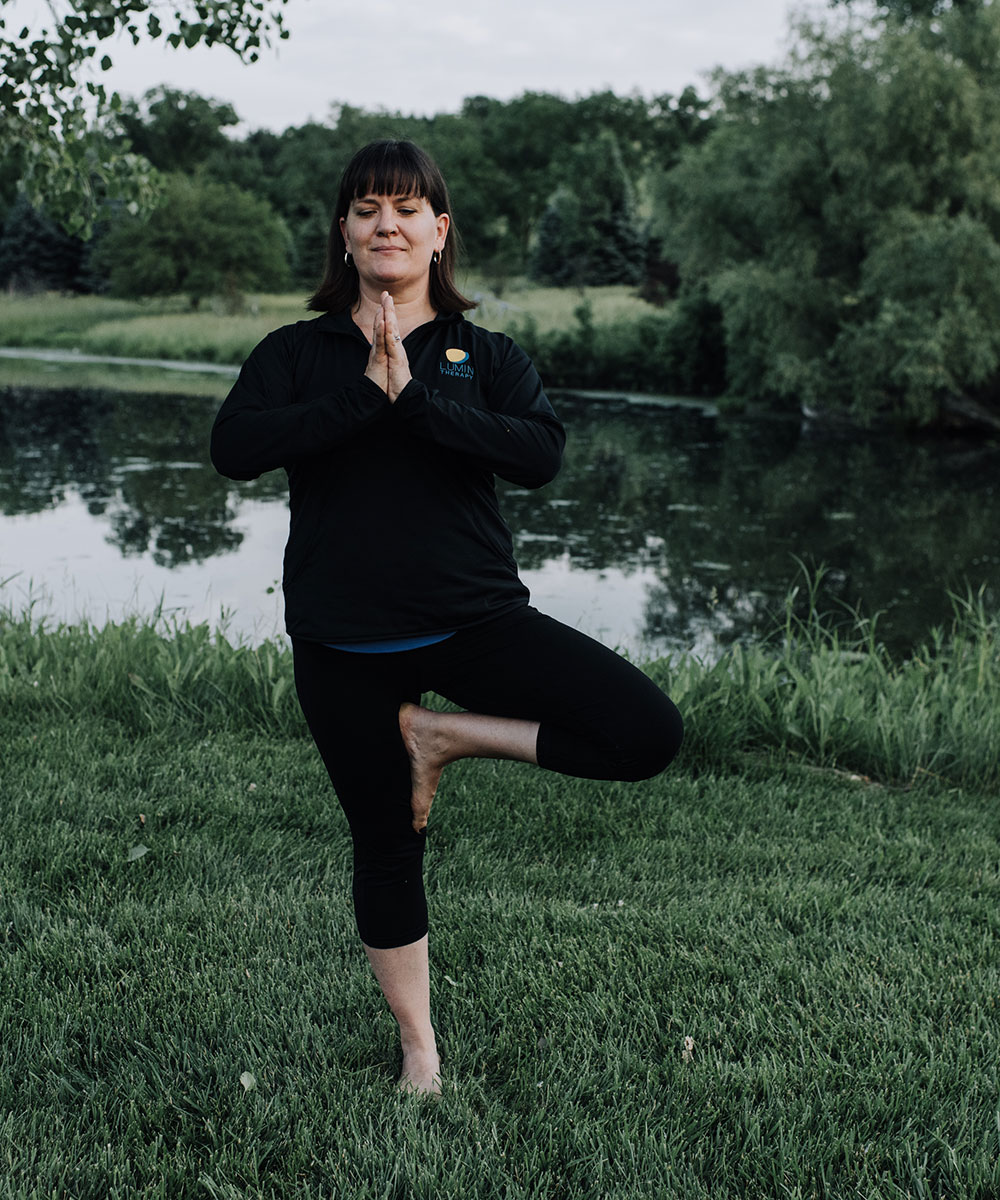
And how do we start such quality self-care and transformation? It all begins with the breath. This breath which gives us life. This breath I take on the fertile soil. This breath I take on my mat. This breath I take with my hands holding to help heal. This breath I take when I hug and hold those I love with the mightiest of strength. This breath I release for comfort and peace. This breath you take with me now. Inhale, hold, love, exhale, now let it all go.
Namaste.
REFERENCES
- Ghaemi, S Nassir (2011) “The Biopsychosocial Model in Psychiatry: a Critique” An International Jounral in Philosophy, Religion, Politics and the Arts. 6(1):
- Engel George L (1977). “The need for a new medical model: A challenge for biomedicine.” Science 196 (4286): 129-136.
- Henriques Gregg (2015). “The Biopsychosocial Model and Its Limitations: Recognizing the limitations of the biopsychosocial model. Physchology Today.
- Garner, Ginger (2016). Medical Therapeutic Yoga: Biopsychosocial Rehabilitation and Wellness Care. Handspring Publishing.