


“Where there is no struggle, there is no strength.”
– Oprah Winfrey
It’s important to consult your physician or physical therapist before beginning any new physical activity or exercises and always listen to your body and respect the warnings you hear.
Sadly, all are probably too well familiar of the struggles that we can face as a country, a community, or as family members. Nearly every person I speak to these days is stressed out, hurt, scared or confused by the chaos, the unknown, the struggles we face throughout this nation with jobs, health, relationships, school, the list goes on. The heavy loads that we all carry during a global pandemic alone are enormous strains and many are getting hit with forces from all directions, on all fronts.
But is all the stress we face in life a bad thing? Can a crisis illuminate opportunities?
How can we grow stronger without the stress? I am hopeful that what has been broken will be repaired. Somehow those fissures will all draw closer, the divisions disappear, and strength rebuilt where the struggle was the greatest. We just need to connect back with our foundation, our own strength within for that sense of stability and confidence to handle whatever will come our way. We are all going to come out of this stronger than ever. I have to believe this.
“There is a crack, a crack in everything
That’s how the light gets in” (Leonard Cohen)
This is how the physical body works. We will never build strength in our muscles if we do not put these tissues through some stress. If we want to increase the bulk of our muscles, we first have to tear them down a bit. With the stress and strain put upon muscles, small muscle cells or fibers may be torn. The body then responds by sending new muscle cells to repair all of the little microtears that occurred, bulking up muscle mass. The more we build that resistance over time, the stronger the muscle grows.
Our bones work in a similar way: to increase strength, we must increase stress. For individuals who have suffered from bone fracture, the strength of the bone was unable to withstand whatever load was given. Through physical rehabilitation, we can assist the remodeling process of fractured bone after it begins to heal. Your physical therapist will gradually introduce weight-bearing and resistance exercises to your plan of care to build up the strength at the fracture site from all angles.
This protocol is based on Wolff’s Law, after the German anatomist and surgeon from the 19th century, which states that bones will adapt to the stress placed on them. As you increase the load or increase the stress and strain, the bone will continue to remodel itself stronger and stronger in all the areas where stress is applied. This law is why we emphasize the benefits of weight-bearing and resistance exercises throughout the aging process. Because the inverse of this is true as well, if one decreases the amount of load put throughout, the bones will lose mass and density and become weak and brittle.
We can give resistance through moving the body and limbs through space, against gravity, using our body weight as resistance, bands or dumbbells. The power and strength we can get behind the muscular contraction can come through an increase in neural motor connections. In other words, if we focus and use the mind-body connection we can recruit a larger number of nerve endings to fire efficiently and attract the greatest force from the muscle groups. This comes from mindfulness and repetition—the more we practice, the greater the neural muscular connection.
Let’s begin.
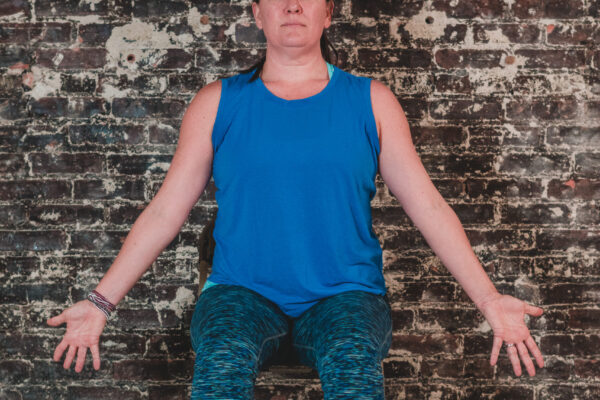
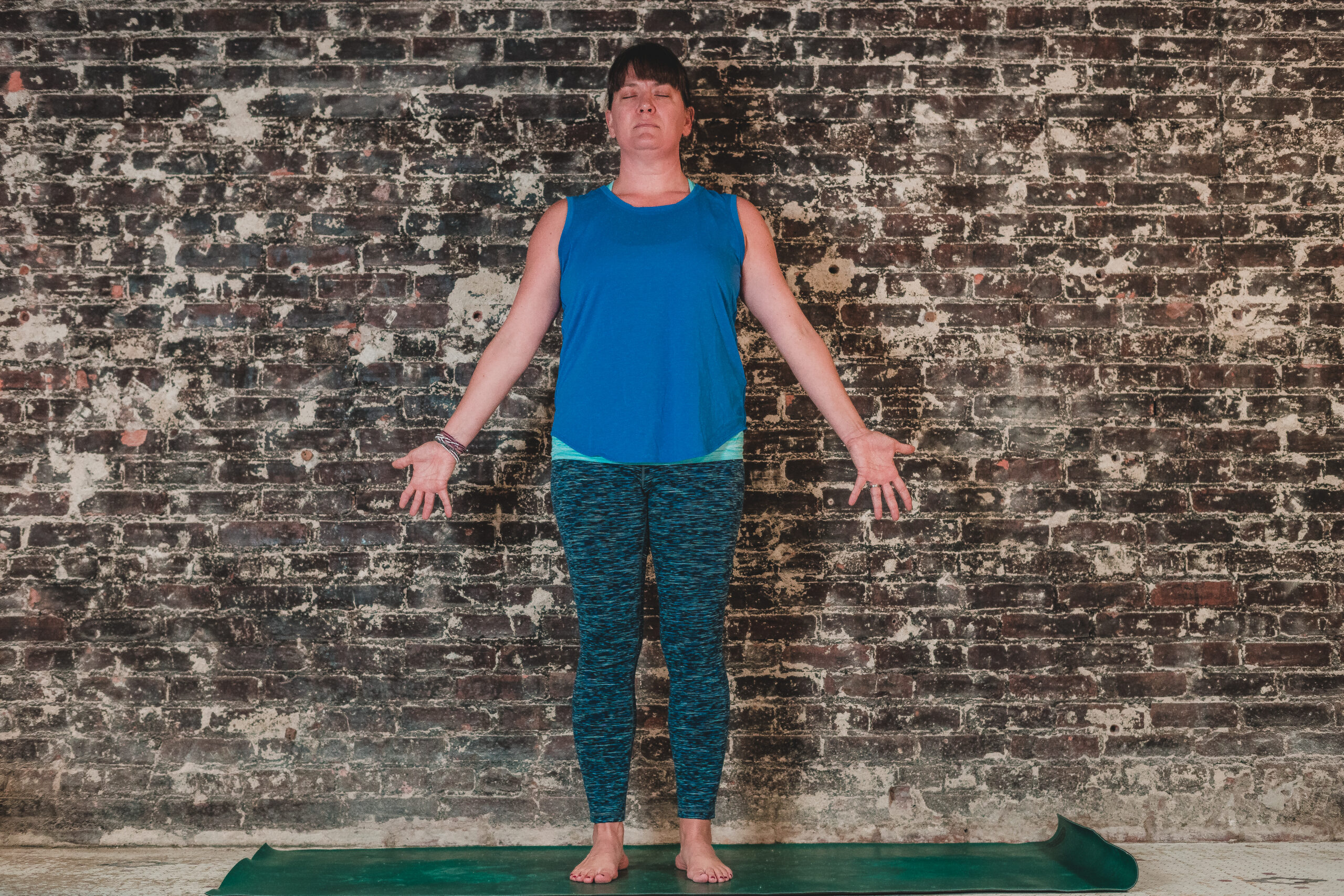
Mountain: This pose is the essence of stability and foundation, it can be done in many positions and is often found in other postures or poses. Engage core by maintaining a neutral spine with the navel drawing inward. Legs and arms are fully engaged with an open heart. Feel connected and grounded to the Earth, while lifting your crown to the Heavens. Feel solid, strong, like a mountain, nothing can knock you down. Breathe in this moment stability and strength.
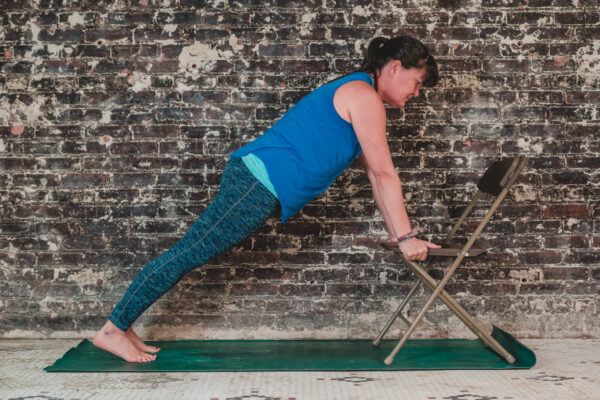
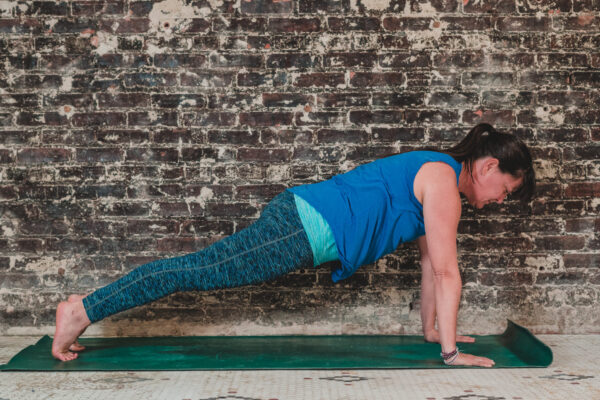
Plank: Think about the strength of Mountain pose for trunk and core, maintaining neutral spine. Arms are extended out, bearing weight through hands to strengthen wrists, elbows, shoulders and tone muscles of the arms. Options to start with low resistance by performing a plank at the wall, counter, or a chair. The more horizontal the body to the ground, the more gravity puts a greater load through muscles and joints. Breathe in this moment stability and strength.
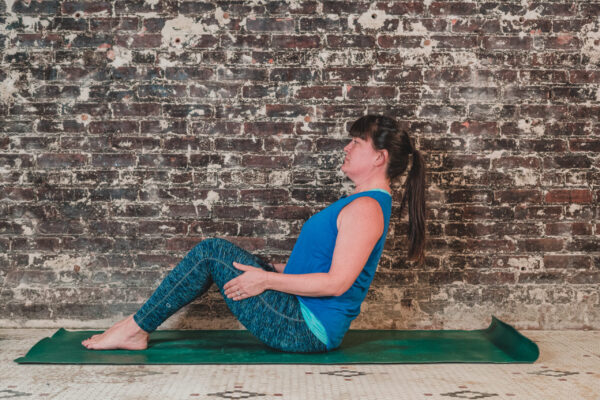
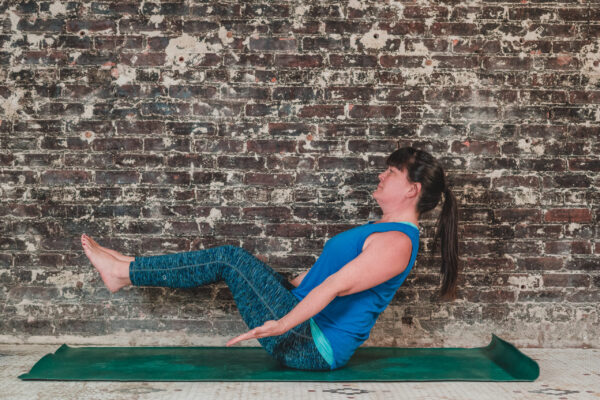
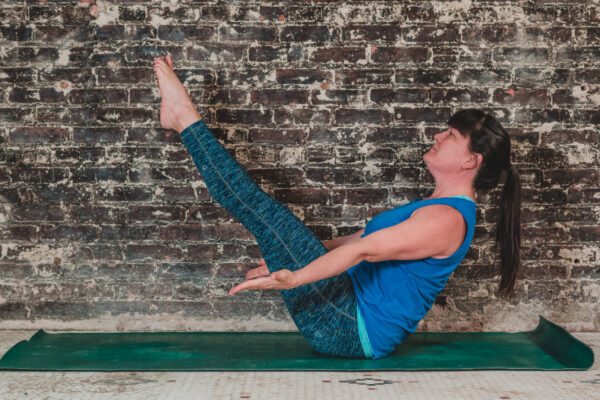
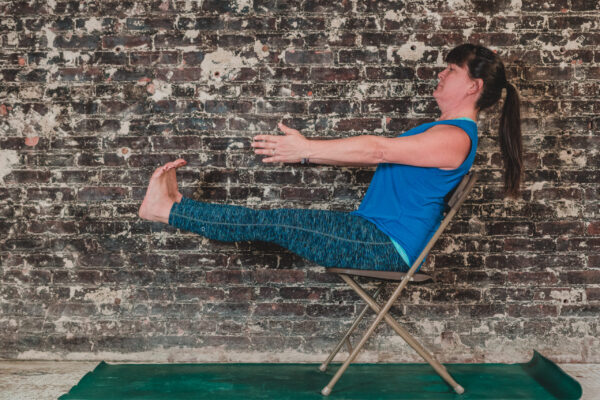
Boat (with variations): The goal again is to maintain that neutral spine like in Mountain. Reclining backwards slightly will increase the load on the core, but avoid going beyond the muscles ability to maintain that neutral spine. Numerous variations of this pose can include, arms helping to support the lift of the heart, feet on ground, knees bent or extended. Try this pose in a chair with various positions of the legs and/or arms. Always keep your boat looking lovely and afloat with your heart center lifted. Do not compromise your spine in this pose by losing the neutral position and rounding throughout the back. Stay with whatever variation in which the core can maintain a long, neutral spine. With continued practice, the muscles will strengthen and then you can advance to greater intensity if you wish. Breathe in this moment stability and strength.
When performing any exercises always listen to your body, move slowly, and remember to breathe. It can be common to a feel gentle pulling sensation with stretches or toning of muscles through engagement and holds. You should not feel any numbness, tingling, sharp, shooting, intense, or burning pain. If you do, back off until it goes away or consult your physical therapist.